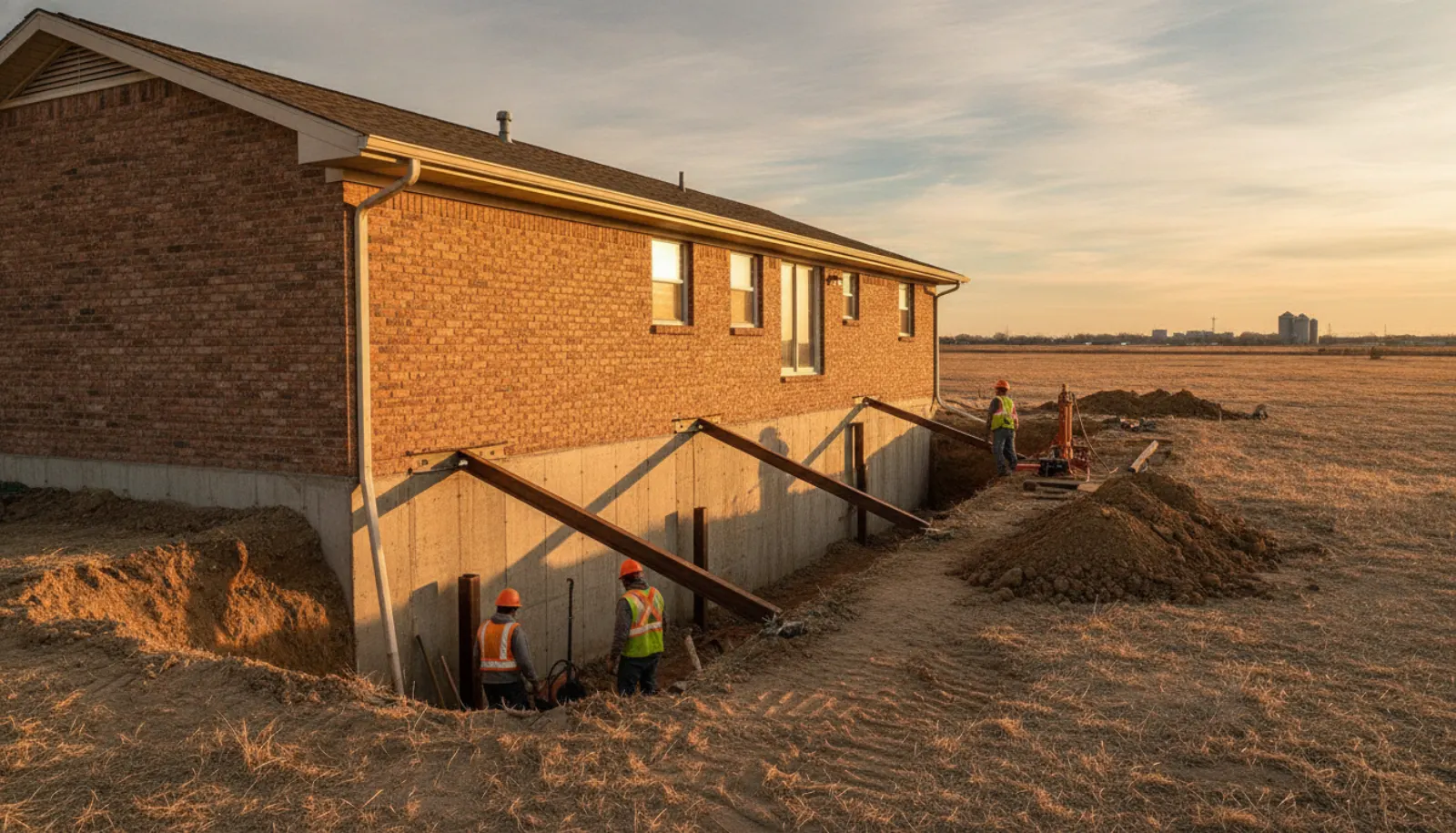
Why it happens in Lincoln
A door frame is a near-perfect rectangle. When the wall it sits in moves even a little, the rectangle turns into a slanted shape, and the door no longer fits. That is why doors are often the first sign you notice.
Soil that grows and shrinks. Most Lincoln homes sit on loess with clay below. USDA rates the clay subsoil of Wymore, the most common soil in Lancaster County, in the highest shrink-swell class. When soil under one side of the house dries more than the other, that side can drop. When it soaks up water, it can lift.
Big swings between wet and dry years. Lincoln averages about 29 inches of rain a year. In the 2012 drought it got about 19, according to University of Nebraska climate records. A swing like that changes how much the soil holds, and many homeowners notice doors acting up after one.
Sagging floors inside. In basement homes, a beam and posts hold up the middle of the house. If a post sinks, the floors and walls above it drop, and the doors in the middle of the house start to rub.
Older homes. About 1 in 8 Lincoln homes was built in 1939 or earlier. Older homes have had more years to settle, and many have been remodeled with walls moved or removed.