Skip to content
Lincoln Foundation Repair

Serving Lincoln and nearby areas

Crawl Space Repair in Lincoln, NE

Firm up sagging floors and dry out a damp crawl space. Free inspection and a written price from a local Lincoln crew.

Book a free foundation inspection

Tell us what you are seeing. A local specialist calls you back the same business day.

Local to Lincoln

We connect property owners in Lincoln and nearby areas, including Near South, Woods Park, Country Club, North Bottoms, Havelock and University Place, with one independent local foundation repair specialist.

  • Clay that moves

    USDA data puts the clay subsoil of Wymore, the most common Lancaster County soil, in the highest shrink-swell class.

  • Wet ground in spring

    USDA data shows common Lincoln clay soils are often saturated within one to three feet of the surface in March and April.

  • Older homes

    About 1 in 8 Lincoln homes was built in 1939 or earlier. Wood under those floors has seen decades of wet springs.

What it costs

Typical published ranges for Lincoln. The contractor's written estimate is the price, and the inspection is free.

WorkTypical range
Inspection and written estimate Free
Crawl space repair, typical range $500 to $7,500
Replace a floor joist $100 to $300per joist
Replace a support beam $1,500 to $5,000per beam
Vapor barrier $1,500 to $4,000
Full encapsulation $2,000 to $15,000

See typical foundation repair prices in Lincoln

What the local crew fixes

These are the crawl space problems Lincoln homeowners call about most:

"The floor in the back room sags."

"The kitchen floor feels bouncy when I walk across it."

"The porch addition is pulling away from the house."

"The house smells musty, and it seems worse in summer."

"There is standing water in the crawl space after it rains."

"The wood under the floor looks dark and soft."

"A home inspector found rot or mold under the house."

Where crawl spaces show up in Lincoln

Even homes with a basement can have a crawl space somewhere. These are the usual places:

Additions

Back porches turned into rooms, sunrooms, kitchen bump-outs and mudrooms were often built over a short crawl space instead of a full basement.

Older homes

About 1 in 8 Lincoln homes was built in 1939 or earlier. Some older homes have a partial basement with a crawl space under the rest of the house.

Some newer homes and split-levels

Have a crawl space under one section.

An addition over a crawl space often sits on a shallower foundation than the main house. When the soil moves, the two parts can move differently. That is why a crack where an addition meets the house is one of the most common calls.

Why crawl spaces have problems in Lincoln

Clay soil. Most Lincoln homes sit on loess, a fine wind-blown silt, with clay in the lower layers. Wymore, the most common soil in Lancaster County, has a subsoil of about 42 to 55 percent clay, according to USDA. Its shrink-swell rating is in the highest class. Posts and short footings in a crawl space sit right in that soil. When it swells or shrinks, they move.

Wet springs. USDA data shows the main clay soils here are often saturated within one to three feet of the surface in March and April. A crawl space is only a few feet deep. Water in the soil can seep up or in and pool on the floor.

Big swings in rain. Lincoln averages about 29 inches of rain a year, according to University of Nebraska climate records, with the most in May and June. In the 2012 drought it got about 19. Wood under a house that goes from damp to dry and back again can crack, twist and rot.

Frost. The City of Lincoln asks for frost-free deck footings at least 36 inches deep. A shallow footing under an old porch or addition may not reach that deep, so frost can lift it in winter.

How a local crew fixes it

The inspector looks at the supports, the wood and the moisture. These are the common fixes.

New supports

Steel posts set on solid footings go under sagging beams. They are adjusted up a little at a time to bring the floor back toward level. Extra supports shorten the span between posts, so the floor feels firm.

Joist repair

Cracked, rotted or undersized joists can be doubled with new lumber bolted alongside, or replaced. This is called sistering.

Beam repair

A beam that has cracked or rotted can be replaced, or a new beam can be added under the old one.

Vapor barrier

A heavy plastic sheet covers the dirt floor and keeps ground moisture out of the air and the wood.

Encapsulation

This goes further than a vapor barrier. The crew seals the floor and walls with a heavy liner, closes the vents, and adds a dehumidifier to keep the space dry year round.

Drainage

If water pools in the crawl space, a small drain and sump pump can move it out. Outside, gutters, downspout extensions and regrading keep water from getting in to begin with. See basement waterproofing.

Foundation work

If the foundation wall under the crawl space has cracked or sunk, the fix may include crack repair or piers. See foundation repair.
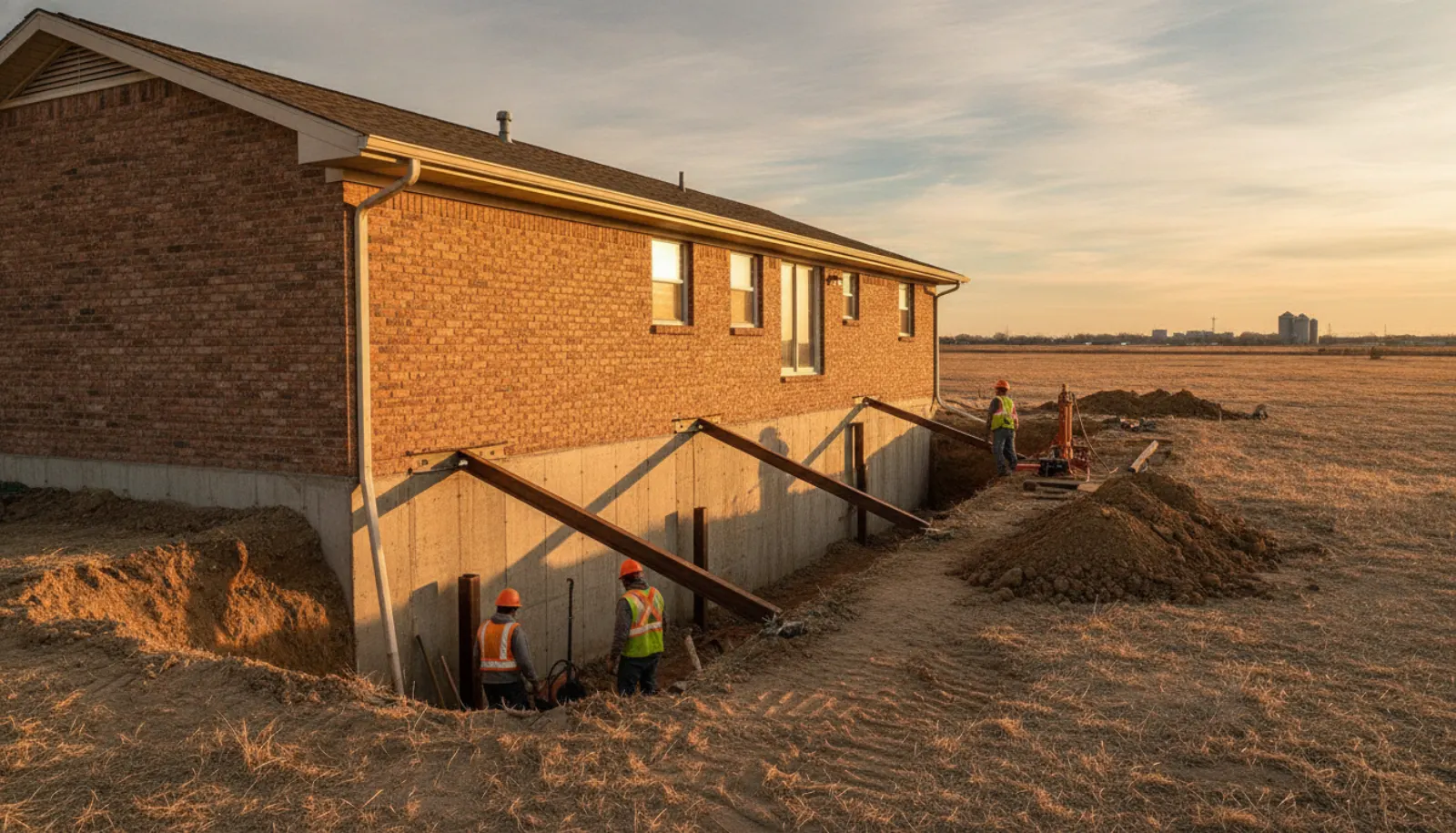
What a good inspection covers

Expect the inspector to:

  • Go into the crawl space and check every post, beam and joist they can reach
  • Test the wood for rot and measure moisture
  • Check the floor above for level
  • Look for standing water, mold and damage from pests
  • Check vents, the access door and any insulation
  • Look outside at gutters, downspouts and how the yard slopes
  • Give you a written plan with what goes where and what it costs

What moves the price

Most crawl space repairs fall between about $500 and $7,500, with a national average near $4,500, according to Fixr. These things move the price most:

How many supports or joists

A few joists cost far less than a whole floor.

Beams

Replacing a beam runs about $1,500 to $5,000 each.

Moisture work

A vapor barrier is about $1,500 to $4,000. Full encapsulation runs about $2,000 to $15,000.

Access

A tight, low crawl space takes more time to work in.

Mold

Mold removal adds about $500 to $2,000.

See the full cost guide for more.

Frequently asked questions

Why is my floor bouncy or sagging?

The most common causes are a beam or post that has sunk, joists that have cracked or rotted, or supports spaced too far apart. Damp air in the crawl space can soften wood over time. The inspector finds which one it is.

Does my Lincoln home have a crawl space?

Even a home with a basement can have a crawl space under part of it. Add-ons like back porches, sunrooms and kitchen bump-outs often sit over one. Look for a small access door in the basement wall, a closet floor or the outside foundation.

Do I need a vapor barrier?

If the crawl space has a dirt floor, a vapor barrier is a low-cost way to keep ground moisture out of the air and the wood. Full encapsulation goes further and seals the walls and vents too.

Is encapsulation worth it?

It can be when the crawl space is wet, smells musty, or has mold. It costs more than a simple vapor barrier. Ask the inspector whether your crawl space needs it or whether a barrier and better drainage will do.

Can a sagging floor be lifted back to level?

Often, yes. The crew lifts the floor slowly, a little at a time, so walls and trim are not stressed. Some sag is old and set in, and it may not come all the way back. Your estimate should say how much lift to expect.

How long does crawl space repair take?

Adding supports or fixing a few joists often takes one or two days. Encapsulation can take a few days, depending on size and access.

Is mold in my crawl space dangerous?

Mold can damage wood and add to a musty smell in the house. Stopping the moisture is the first fix. The inspector can tell you if mold removal is needed before other work.

Questions to ask before you sign

  1. What is causing the sag, and does the plan fix the cause?
  2. How many new supports, and where do they go?
  3. How much lift should I expect?
  4. Do I need a vapor barrier, full encapsulation, or neither?
  5. What does the warranty cover?
  6. Does the price include hauling away old wood and debris?
(402) 923-8559 Free inspection