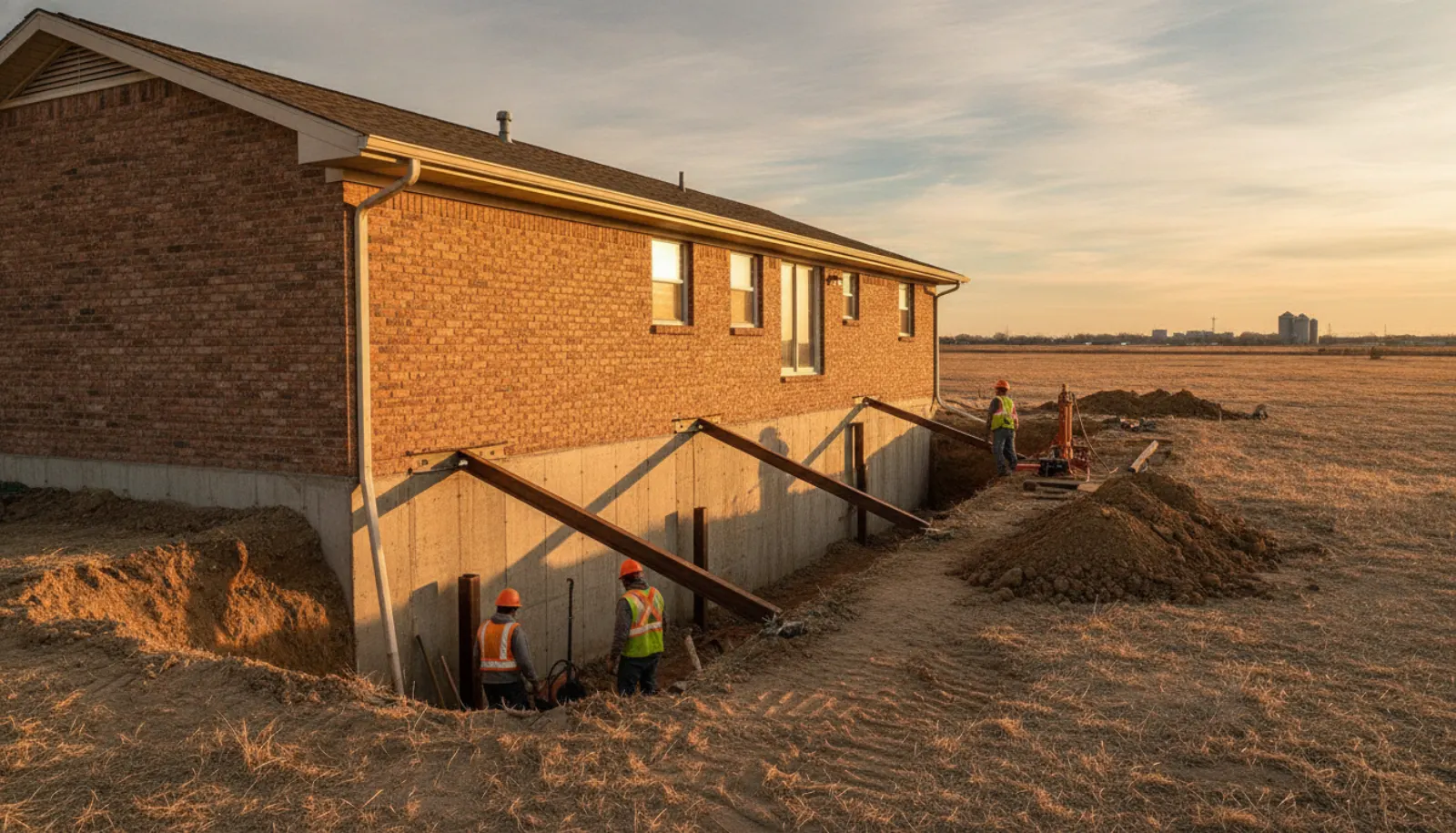
Why foundations move in Lincoln
Clay soil. Most of the Lincoln area is covered in loess, a fine silt blown in by wind long ago. The lower layers of that soil turned into clay. Wymore is the most common soil in Lancaster County. USDA data shows its subsoil is about 42 to 55 percent clay, with a very high shrink-swell rating. Pawnee soil, formed in old clay till, and Crete soil are also common around Lincoln and move the same way. Wet clay swells and pushes. Dry clay shrinks and pulls back.
Wet springs and dry summers. Lincoln averages about 29 inches of rain a year, according to University of Nebraska climate records. May and June bring the most. Dry spells can follow. In the 2012 drought, Lincoln got only about 19 inches all year. When the soil under one corner dries out and shrinks, that corner can drop. When it soaks up water again, it swells and pushes on the walls.
Frost. The City of Lincoln asks for frost-free deck footings at least 36 inches deep. Frost pushes hardest on the top part of a basement wall, where the ground freezes. Wet soil that freezes swells. Over many winters, that push can bow a wall in.
Water that sits against the wall. USDA data shows that common Lincoln clay soils are often soaked to within one to three feet of the surface in spring. Water held in clay pushes on the wall from the outside. A gutter that dumps at one corner or a yard that slopes toward the house makes it worse.
The house itself. About 1 in 8 Lincoln homes was built in 1939 or earlier, and many more went up between 1970 and 1999. Older walls of block, brick or early concrete were built before modern drains and wall ties were common. Newer homes can settle as the soil packed back around the basement firms up.